
Turning waste into resources: the regenerative potential of fishery by-products

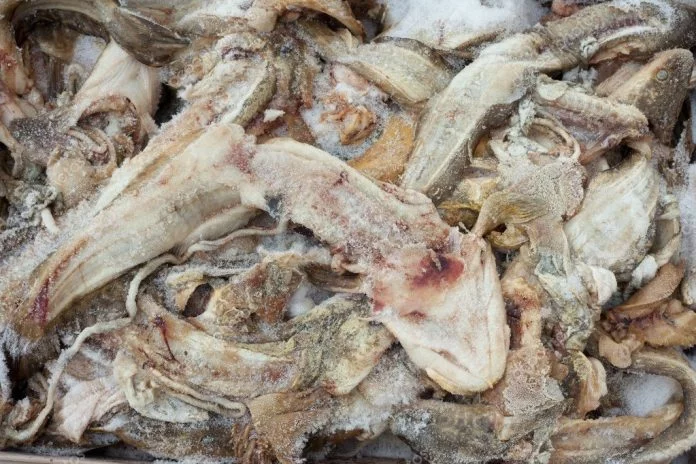
Around the world, awareness is growing that fishery and aquaculture by-products are not “waste” but materials rich in untapped value. Viscera, skins, shells, scales, processing water – elements often discarded or overlooked – can instead be transformed into fertilizers, functional proteins, collagen-based products, bioplastics, and more.
A 2025 study explores exactly this: how regenerative principles can be applied to aquatic production systems to recover value from biological residues, integrating technologies, policy frameworks, and new value-chain models.
🔍 Key Insights from the Study
Drawing on global case studies and innovations developed between 2020 and 2025, the research shows that we are entering a new phase of the blue economy:
1. Enormous untapped potential
Many by-products contain valuable technical properties:
- scales are rich in collagen;
- viscera and heads contain functional proteins;
- crustacean shells can be transformed into chitin and chitosan;
- processing water can be valorized through advanced filtration or fermentation.
Yet in much of the world, these materials are underutilized or discarded.
2. Technologies driving the transition
Key enabling processes include:
- fermentation;
- anaerobic digestion;
- enzymatic hydrolysis;
- advanced thermal treatments.
In parallel, digital technologies – sensors, smart monitoring, traceability systems, IoT – are improving efficiency, safety, and transparency along supply chains.
3. Environmental benefits
A regenerative approach leads to:
- reduced pollution;
- lower emissions;
- better wastewater management;
- reduced pressure on natural ecosystems.
A shift that aligns closely with the 100% Fish philosophy: use everything, waste nothing.
⚠️ Barriers to wider adoption
Despite progress, large-scale adoption remains limited due to:
- insufficient processing infrastructure;
- fragmented or inconsistent regulations;
- limited technical expertise;
- low market confidence in bio-based products;
- difficult access to financing—especially in low-resource settings.
Many communities still operate under traditional linear models: catch → process → discard. Moving to a circular model requires time, investment, and institutional coordination.
🌍 A multi-level transformation is needed
The study concludes that real change depends on three parallel shifts:
- Technological readiness – ensuring that advanced processing technologies are accessible even to small and medium operators.
- Institutional reform – coherent policies, incentives, and regulatory clarity supporting circular use of by-products.
- Stakeholder engagement – collaboration between industry, research, institutions, communities, and consumers.
Recommendations include decentralizing processing, strengthening training and capacity building, and fostering transparency to build trust in recycled bio-based products.
👉 Source. If you would like to explore this topic further, you can read the full study here: “Regenerative Use of Biological Residues in Aquatic Production Systems”, Multidisciplinary Futuristic Development Journal, 2025
🔵 Why this matters for Blue5Helix
This study speaks directly to the mission of our network and platform: innovation, sustainability, and the blue economy. It shows that the shift from “waste” to “resource” is not only possible but it is already happening globally. Iceland, Scotland, Finland, Canada, Bangladesh, and many others are advancing circular marine value chains.
What about us? The Mediterranean can play a central role in this transition!
💬 Which marine by-products could be valorized in our region?
💬 What technologies or collaborations can we activate within the Blue5Helix community?



Responses